Pages

  • Twitter
  • Facebook
  • Google+
  • RSS Feed
Showing posts with label notebook. Show all posts

Tuesday, April 29, 2014

The gaming arms race continues, and the latest to escalate this never-ending battle is the ASUS G750JZ-XS72, a $2,999 system with Nvidia's newest and most powerful mobile graphics card. But in addition to the GeForce GTX 880M GPU, this 17-inch rig also features a 2.4-GHz Intel Core i7-4700HQ processor, a whopping 32GB of RAM, and dual 256GB solid-state drives (SSDs) in a RAID 0 array. Will this notebook ensure destruction for the competition?
 
While much of the public discourse about laptops and mobile PCs is taken up with ultrabooks, hybrids, and other ever-slimmer devices, there's still room for the traditional 17-inch gaming desktop replacement.
As it happens, we tend to see an influx of such systems just after Nvidia (or AMD) introduces a new generation of mobile graphics cards. In this case, it's a new GeForce 800M series from Nvidia, and we've almost simultaneously seen new gaming laptops from Asus, MSI, Razer, and others.
The very first gaming laptop with Nvidia's highest-end GeForce GTX 880M card that we've tested is the Asus G750. The specific model number for our configuration is the G750JZ-XS72, which in our random-model-number-to-English dictionary means this is a $2,999 configuration that includes twin 256GB SSDs, a Blu-ray burner, and a whopping 32GB of RAM, on top of the already high-end CPU/GPU combo. For $2,499, you can cut the SSD and RAM, and downgrade to a simple Blu-Ray read-only optical drive.
Sarah Tew/CNET
In either case, it's a lot of cash for a device with a 1,920x1,080-pixel non-touch display and an industrial design that feels locked in the past. That said, performance, especially in games, is fantastic. This system easily beat similar models from 2013 with that year's high-end GeForce GTX 780M GPU.
No one, aside from Razer, really makes a gaming laptop with modern aesthetics, but Asus has invested heavily in its gaming line for years, with included overclocking and audio tweaking software and rear-vented exhaust ports, plus some very high-end configurations with plenty of ports and connections. It's about as specialized as a gaming laptop gets without going to a build-to-order boutique such as Origin PC or Maingear.

Design and features
Even big, bulky gaming laptops now have brushed-metal lids and keyboard trays, matte chassis, finger-friendly keyboards and touch pads, and other nods to minimalist design (and thankfully, a lack of chrome accents or flashing multicolored lights). That's not to say that these sort of systems -- not to single out the Asus G750 -- look like truly 2014-era products.
In this case, you get a big black box with a massive desktop footprint. The chassis angles down toward the front, but the front lip is still one full inch off the desktop (and nearly two inches high in the rear). Exhaust fan ports, which use internal copper tubing to direct heat away, are on the rear edge panel, which is preferable to the side edges, where they can blow hot air on peripherals, cables, and so on.
Sarah Tew/CNET
The overall look, while not garish, is largely the same as the last several generations of Asus gaming laptops. Few do better, but that's a low bar. Razer is one of the only companies doing anything really innovative with gaming laptop design, but those slim systems include their own trade-offs.
The keyboard is a standard island-style model, easily fitting in a full number pad, thanks to the large keyboard tray. The main concession to gamers here is deep key travel, with hefty keys offering satisfying tactile response. The keyboard is also backlit, but offers no game-centric specialty keys or macro keys.
The large touch pad feels dated, with its separate left and right mouse buttons, while most other laptops have moved to clickpad-style touch pads. For PC gaming, one could argue that clickpads are suboptimal, but most gamers will be playing with a mouse or game pad in any event, so your touch-pad interaction will generally be for Web surfing and productivity tasks.
Sarah Tew/CNET
Of course, any gaming laptop lives or dies based on its display. In this case, you get a 17.3-inch 1,920x1,080-pixel screen that works well, but doesn't distinguish itself from the competition. On the plus side, the screen has a matte antiglare finish, which I've always thought added realism and immersion in games. Off-axis viewing is decent for a non-IPS screen.
However, laptop displays are in a far different place than they were just a couple of years ago. Touch is practically standard and finally showing up in systems with discrete GPUs (but still not really in desktop replacements). And higher resolutions are showing up at lower and lower prices, such as the 13-inch Yoga 2 Pro, which hits 3,200x1,800 pixels for under $1,000. In the gaming department, the upcoming 14-inch Razer Blade has a 3,200x1,800-pixel touch screen for $2,199, and the new Lenovo Y50 gaming laptop promises 4K resolution in a 15-inch display.


Asus G750JZ-XS72
Video HDMI, VGA, and mini-DisplayPort
Audio Stereo speakers plus subwoofer, headphone/microphone jacks
Data 4 USB 3.0, Thunderbolt, SD card reader
Networking Ethernet, 802.11ac Wi-Fi, Bluetooth
Optical drive Blu-ray burner

MORE: Best Gaming Laptop 2014
Measuring 16.1 x 12.5 x 0.67-1.96 inches and weighing 9.4 pounds, the G750JZ is a beast of a laptop. It's smaller but heavier than the Alienware 17 (17.9 x 12.9 x 2.26-2.23 inches, 9.2 pounds), and is also slightly heavier than the G750Jx, which weighs 8.8 pounds. The MSI GT70 (16.85 x 11.34 x 2.17 inches, 8.4 pounds) is the lightweight of the group.


Display

The ASUS G750JZ's 17.3-inch, 1080p display delivered strong visuals, whether we were watching movies or playing games. A trailer for "Captain America: Winter Soldier" looked crisp and vibrant, and we could make out individual scratches on Captain America's shield.
Viewing angles are wide enough to accommodate several people huddled on either side of the notebook, but vertical viewing angles were much more limited. We liked that the matte display cut down on reflections, but colors didn't pop as much as they would on a glossy panel. Still, it's hard to argue with the high level of detail we saw when playing "World of Tanks" and "Metro: Last Light." Everything from dust clouds to dead aliens was rendered sharply.
At 268 lux, the ASUS outshined the desktop-replacement category average (254 lux), as well as the MSI GT70 (240 lux), but not the Alienware 17 (307 lux).

Keyboard and Touchpad

When playing on a notebook as opposed to a desktop, one concession gamers have had to make is the keyboard. Those found on mobile systems generally don't compare to customizable mechanical keyboards you can purchase from third-party vendors.
ASUS is trying to bridge that gap with the keyboard on the G750JZ. Its key travel of 2.5mm made for a very comfortable typing experience.

MORE: The Best Gaming Keyboards You Can Buy
While we like that the keyboard has adjustable white backlighting, it lacks the fun, multicolored effects found on MSI and Alienware systems. Another feature that ASUS -- as well as all gaming-notebook makers -- should add is the ability to make every key programmable, as on the Razer Blade.
The G750JZ's 4.5 x 2.75-inch touchpad was plenty spacious for executing Windows 8 gestures. There were times, however, when we wished the notebook had a touch screen.
MORE: Top Gaming Mice 2014

Audio

Despite having a subwoofer in addition to stereo speakers, audio from the ASUS G750JZ was loud, but the quality was just mediocre. Bruce Springsteen's "Born to Run" was on the tinny side. The same went for other genres of music -- Jay Z 's "Encore" lacked a thumping bass line. However, audio on a trailer for "Captain America," as well as on the games we played, sounded full and immersive.
The ASUS Audio Wizard, which is powered by MaxxAudio, has five presets: War Room, Soundscape, Battlefield, Action and Multimedia. None of them did much to improve the quality of whatever we were listening to, but we did like the fact that we could tweak individual EQ settings .
At 80 decibels (as measured from 23 inches away), the G750JZ is on the quiet side for a gaming rig. It's 9 dB below the desktop-replacement average, and 17 dB lower than the Alienware 17.

Heat

As if its massive rear vents didn't give it away, the ASUS G750JZ is very efficient at expelling heat. Inside, the notebook features three heat pipes and dual copper sinks for the GPU and CPU.
After streaming a Hulu video at full screen for 15 minutes, the touchpad measured 81 degrees, the space between the G and H keys was 87 degrees and the middle of the underside was 88.5 degrees. All are comfortably below our threshold of 95 degrees.

We then blasted enemy tanks for 15 minutes in "World of Tanks," and the G and H keys measured 92 degrees and the touchpad was 81 degrees. However, the bottom, near the right vent, jumped to a toasty 106 degrees.
Not only does the G750JZ do a reasonably good job of keeping its cool, but we never noticed any fan noise.

Ports

The left side of ASUS' rig houses two USB 3.0 ports, a DVD/Blu-ray drive, and a 3-in-1 card reader.

The right side has ports for VGA, Ethernet, HDMI 1.4, Thunderbolt, two more USB 3.0 ports, and headphone and mic jacks. About the only thing missing is the combo HDMI-in/out port that's featured on the Alienware 17 -- but that's nitpicking.

Graphics and Gaming

The ASUS G750JZ features Nvidia's newest high-end GPU, the GeForce GTX 880M, with 4GB of GDDR5 memory. According to Nvidia, this chip will provide up to 15 percent more performance over the previous-generation GTX780M GPU.
When playing "World of Tanks" with the settings at maximum, we averaged between 60 and 70 frames per second, and marveled at the details of the buildings, as well as the waving grass and palm trees. When our tank was inevitably destroyed, it went up in an impressive plume of fire and smoke.
On 3DMark Fire Strike, a graphics benchmark that tests DirectX 11, the G750JZ scored 2,780, which is 500 points higher than the average (2,272), and 400 points higher than the Alienware 17 (2,367), which has an Nvidia GeForce GTX 780M GPU with 4GB of memory.
When we fired up our entry-level "World of Warcraft" gaming test, the G750JZ averaged 140 fps with the effects on Ultra and the resolution at 1920 x 1080 pixels. That blew away the category average of 114 fps, as well as the Alienware 17 (103 fps) and the MSI GT70 (105 fps), which also has the Nvidia GeForce GTX 780M GPU.
On the more demanding "BioShock Infinite," the ASUS averaged 65 fps with the settings on High and the resolution at 1080p. While the gap between that frame rate and the average (57 fps) was narrower, it still handily beat both the Alienware (35 fps) and the MSI (44 fps).
Finally, on "Metro: Last Light," the ASUS G750JZ averaged 81 fps with the effects on Low and the resolution at 1080p. On this test, the ASUS was on a par with the Alienware (84 fps) as well as the category average (80 fps). With effects set to High, the ASUS' frame rate dropped to an unplayable 24 fps, which was just higher than the Alienware (22 fps) and the average (18 fps).
But greater performance is just one aspect of Nvidia's new family of GPUs, which includes the 880M. Built into the GeForce Experience app are several features meant to enhance gameplay and endurance.
Battery Boost lets you cap performance at a predetermined frame rate. The app will then throttle the notebook's components, so that gamers can eke out a bit more juice while not sacrificing too much performance.
Battery Boost Custom Game Settings, available in early April, lets you tweak individual titles even further.
ShadowPlay lets users record gameplay at resolutions up to 1920 x 1080p, and broadcast your gaming sessions to sites such as Twitch.
GameStream, previously only available on Nvidia's desktop GPUs, allows you to stream games from your notebook to connected devices, such as Nvidia's SHIELD.


Connections, performance, and battery
One of the fun things to do with a big gaming rig is hook up multiple external monitors, and with the HDMI and mini-DisplayPort jacks on the right edge, you can do just that, with the high-end GPU allowing you to drive each one at HD resolutions.
Sarah Tew/CNET

The Intel Core i7-4700HQ processor matches up well against other recent gaming laptops, and actual application performance is not much different than you'd find in recent 17-inch systems from Alienware, Origin PC, and others (in fact, the Asus CPU is a hair slower than some of the others, but the practical effect is nil).
What we're really interested in here is the new Nvidia GeForce GTX 880M graphics card, and this is the first laptop we've reviewed with that just-released component. As we pointed out during our initial tests when the 800-series Nvidia GPUs were announced, the GTX 880M churned out more frames per second in our gaming tests than a similar system with last year's GTX 780M GPU. Likewise, a new MSI laptop with the GTX 860M beat out a 2013 laptop with the GTX 760M.
So, this Asus is the fastest gaming laptop we've ever tested, right? Not quite. We did find one gaming laptop with better frame rates, and that was the ridiculously indulgent Origin PC EON17-SLX. That $4,400 monster included two GTX 780M cards in an SLI configuration, and easily beat the single-card Asus.
That means the Asus G750 ran Metro: Last Light (a very challenging test) at 30.7 frames per second, while last year's Alienware 17 (with a one-generation-behind GPU) ran the same test at only 18.7 frames per second. However, the dual-card Origin PC laptop, with two last-gen cards, beat them both, at 41.7 frames per second. You can see further comparisons in our benchmark charts below.
Sarah Tew/CNET
A separate Asus software app, called GPU Tweak, allows you to do some software-based overclocking of your video card. It can squeeze another 5 percent out of your GPU, but messing with the settings should be left to experts, as you can create excessive heat and stability problems (although Asus claims the version of the app bundled with this system is perfectly tweaked for this hardware and its cooling system).
Despite all the CPU and GPU power, the Asus G750 actually does well on our video playback battery drain test, running for 5 hours and 17 minutes. That's better than any other recent 17-inch gaming laptop, and thanks in part of Nvidia's Optimus technology, which switches off the GPU when it's not needed. Nvidia is also promoting a new feature of its GeForce Experience software app, which promises game settings tweaks to prolong battery life. That's not fully functional yet, but we'll take another look at it when it is.
System configurations
Asus G750JZ-XS72
Windows 8.1 (64-bit); 2.4GHz Intel Core i7 4700HQ; 32GB DDR3 SDRAM 1,600MHz; 4GB Nvidia Geforce GTX 880M; 256GB SSD (X2), 1TB 7,200rpm HGST hard drive

Source
Laptop Mag Asus G750JZ-XS72 Reviews (4/5) -March 12, 2014
Pros: Top-end gaming performance; Runs quiet and cool; Attractive design; Very good battery life
Cons: Expensive; Keyboard not customizable
The Verdict: The Asus G750JZ makes the most of Nvidia's new GeForce GTX 880M graphics, delivering awesome gaming power in a sleek design.
CNET  Asus G750JZ-XS72 Reviews (CNET Editor's Rating 4/5) -March 18, 2014
The Good The Asus G750 is one of the first laptops with Nvidia's new top-end GeForce GTX 880M graphics cards. The hefty keyboard is great for WASD gaming, and a generous selection of ports makes it easy to add accessories or external monitors.
The Bad For a $3,000 laptop, this still looks like a thick, clunky box. The screen skips the higher resolution and touch functionality we're seeing more often in premium laptops.
The Bottom Line The Asus line of gaming laptops has always offered excellent high-end configurations, along with custom software and hardware tweaks. This latest version of the G750 bets on Nvidia's brand-new line of GPUs, and includes the current top-end card for great gaming performance.
Official Website
 
Where to Buy

Friday, April 18, 2014

The Thinkpad Ultrabook Gets a High-End Windows 8 Touch

High performance laptops are nothing new, but until recently they were hulking beasts that could break one's back if carried out of the house. Things have changed - it's now possible to have top performance in ultra-portable packages, as demonstrated by the Lenovo ThinkPad X1 Carbon Touch Ultrabook.
It's hard to classify the Lenovo's direct competitors due to the huge variety of Windows 8 hybrids and laptops on the market. The rulebook has been ripped up and with a traditional laptop design with an added touchscreen, the Lenovo ThinkPad X1 Carbon Touch is one of the more conservative offerings. High performance laptop hybrids such as the Sony Vaio Duo 13 spring to mind, as do traditional Ultrabooks such as the Dell XPS 13 and MacBook Pro with Retina display.
The original 2012 Lenovo X1 Carbon was the best ThinkPad money could buy, but now Lenovo has added a touchscreen panel and changed Windows 7 Professional for Windows 8, bringing last year's model right up to date.
Lenovo ThinkPad X1 Carbon Touch review
 The result is a formidable machine that not only offers the best usability and performance, but also a fantastic Windows 8 experience. However, the eye-watering price tag of £1,779 / US$2,139 / AU$2,538 means this experience doesn't come cheap.
Pick the Lenovo ThinkPad X1 Carbon Touch up and it's immediately apparent that you're holding a different class of laptop. ThinkPad has always been a predominately business brand and you'll have seen the familiar black matt chassis punctuated by that red mouse pointer in Starbucks and train stations all over the place.
Being a ThinkPad, the X1 Carbon Touch retains the looks synonymous with this illustrious range, but the similarities with bog-standard corporate machines end there. Yes there's the red mouse nipple, which is bemusing when a touchscreen and full-sized trackpad are on offer, but it's an example of how important the look of the X1 Carbon Touch is to Lenovo.
Lenovo ThinkPad X1 Carbon Touch review
However, when you pick up the Lenovo ThinkPad X1 Carbon Touch for the first time, the solid, flexless build, smooth rubberised finish and lightweight chassis can't fail to impress. The fact that this machine weighs just 1.5kg (3.3lbs) yet counts as one of the most powerful Ultrabooks on the market speaks volumes about what Lenovo has achieved.
Other Ultrabooks that have tried to achieve this balance of weight and power have ended up scrimping on build quality - such as the HP Envy 15 with its awful trackpad or the Acer Aspire S7 and its keyboard, but the Carbon oozes quality from every port.
From the beautifully spaced and comfortable keyboard that enables immediate, accurate speed typing to the smooth and responsive trackpad to the luxurious panel that manages to marry vibrancy and clarity with a non-reflective finish.
Lenovo ThinkPad X1 Carbon Touch review
Windows 8 review
Windows 8 review
It's not just the weight - or lack of - that makes the Lenovo ThinkPad X1 Carbon Touch such a engineering triumph, it's also the thickness. Despite measuring 22mm (0.87 inches) at its thickest point - a not exactly size-zero waistline - the Carbon's wedge shape gives it the impression of blade-like thinness. It's alluring to look at and commands attention, attracting admiring comments from those around you.
However, to ace a TechRadar review, you need more than alluring looks. So let's get under the hood and see how good the Lenovo ThinkPad X1 Carbon Touch really is.

The expected ThinkPad amenities are standard, including vPro management, TPM, a fingerprint reader, and even an optional integrated WWAN (3G) radio. The carbon fiber cover and cage are, in Lenovo’s parlance, “satellite quality,” and the chassis certainly feels more durable than Sputnik.
Lenovo also hasn’t forgotten about the things that users actually care about. Audio is impressive and Dolby-certified. The keyboard is backlit and fully usable, and the glass touchpad was rock solid on this go-round with the Carbon. (The 2012 unit I tested had a disturbingly loose one.)

Only two complaints marred my experience with the X1 Touch. Foremost is battery life. While I managed to score an extra half hour of video playback versus the old X1, at 3.5 hours of running time, it is still at the bottom of the heap of Windows 8 laptops when it comes to longevity. The screen is also relatively dim, and colors look a bit washed out in comparison to other recent-model laptops.
Of course, there’s also the not-insubstantial price to consider, too. The X1 Touch starts at $1,350 and, as configured, runs a hefty $1,729. That’s cheaper than the non-touch Carbon I reviewed in the fall, but still a huge investment in a laptop, and hundreds of dollars more expensive than the competition in this space. (Acer’s 14-inch Aspire M may be heavier, but it’s less than half the price.)
If you’re trying to convince your boss to buy one for you, my recommendation is lean heavily on the bit about the satellite.

WIRED Excellent combination of performance, portability, and durability. Still the best keyboard going. Trackpad issues resolved. You want bells and whistles?
TIRED Probably the most expensive computer in its class. Screen not as impressive as the previous generation. Battery life upgraded, but still not enough.


Specifications
Under the hood is an Intel Core i7 processor 3667U, the U in that pithy moniker indicating that it's one of the ultra low-power chips designed for Ultrabooks. It packs considerably more power than the likes of the Asus Zenbook or Samsung Series 9, since it's clocked at an impressive 2GHz.
The benchmark scores from our lab tests back this up too, with a top-end performance resulting in roughly 10 per cent more power than rival Ultrabooks such as the Asus Zenbook.
Lenovo ThinkPad X1 Carbon Touch review
The Core i7 chip is also left to handle the graphics tasks in the absence of a dedicated graphics card. It has become the norm for manufacturers to leave 3D graphics to the onboard processor now, but it means that despite the sky-high price tag, the Lenovo ThinkPad Carbon X1 isn't the best choice for heavy video editors or gamers.
Elsewhere there's a whopping 8GB of RAM, an amount normally reserved for gaming machines or high-end powerhouses such as the Samsung Series 7 Chronos. This helps keep the Lenovo ThinkPad X1 Carbon Touch noticeably quick, helping a slick, breathless performance.
There are several models of the Lenovo ThinkPad X1 Carbon Touch at a range of price points, and our model packed a 256GB SSD drive, the highest you can get. The only criticism here is the lack of usable space, and of the 256GB on offer, only 190GB was usable.
Lenovo ThinkPad X1 Carbon Touch reviewLooking at the frankly ludicrous price tag, one might be forgiven for mistakenly thinking that a dedicated graphics chip powered the Lenovo ThinkPad X1 Carbon Touch, but in a laptop this thin all the pixel-pushing has been left to that Intel Core i7 processor. It does a good job and performs better than most Ultrabooks, meaning that even the latest games are within its limitations, if you don't mind sacrificing some graphics performance.
Of course, the 14-inch, 1600 x 900 resolution panel is a key part of this updated Lenovo ThinkPad X1 Carbon Touch, and while we'd like to have seen 1080p included given the price, it's still a good performance.
The colours look great, it's pin sharp despite not being Full HD and it's as great for watching a movie as it is for working on a presentation. What's more, the touch sensitivity is as good as we've seen on a Windows 8 device, and it's miraculously free from smearing.
Lenovo ThinkPad X1 Carbon Touch review
For a laptop that measures 22mm at its thickest point, connectivity is underwhelming, with two USB 3.0 ports, one of which can charge devices when the laptop is sleeping.
There's also DisplayPort for connecting to external monitors and an SD card, but no Ethernet, HDMI or VGA, which will mean carrying extra dongles to your meetings. However, business users will love the fingerprint reader and hard drive protection.

Performance

Benchmarks
Cinebench 10: 11,498
3D Mark: Ice: 32,650 Wind: 3787 Fire: 512
Battery: 192 mins
With a score of 11,498 in our processor tests, it's clear that the Lenovo ThinkPad X1 Carbon Touch is a formidable machine. This kind of score ranks among some of the best performing Ultrabooks on the market, and even manages to give the next generation of Intel processors a run for their money.
Other than top multitasking and app switching speeds, the i7 processor speeds up boot times, enabling it to go from cold to a usable Windows 8 home screen in roughly 15 seconds. Even better is the resume from sleep, which averaged around four seconds, partly due to Windows 8's improvements and of course that wickedly fast chip.
Lenovo ThinkPad X1 Carbon Touch review
However, there's a downside. The high performance third generation Intel Core i7 chip colludes to suck power from the Lenovo ThinkPad X1 Carbon Touch, especially under heavy strain. The result is an uninspiring three hours of battery life in our test, which involves looping a high definition clip with full screen brightness until the laptop dies.
Three hours is one of the lowest Ultrabook battery scores we've seen, and should ring alarm bells for anyone who intends to use the Lenovo ThinkPad X1 Carbon Touch at high load while away from mains electricity.
Turning the screen brightness down and sticking to moderate web tasks increases lifespan to around four hours, which is still underwhelming when you consider the Samsung Vaio Duo 13 running Intel's latest Haswell fourth generation processor managed six hours in the same test.
Lenovo ThinkPad X1 Carbon Touch review
If you spend long periods on the road, you could be frustrated by the disappointing longevity, especially given the Ultrabook's sky-high price tag. Intel's new chips, announced in May and being released in earnest later this year, will offer better longevity and battery performance, which makes the £1,779 / US$2,139 / AU$2,538 price seem even less appealing.
As with most Ultrabooks there's no dedicated graphics, and while games might be playable on lower settings, it's in no way suited to overly creative tasks or heavy video editing. We wouldn't normally pull up an Ultrabook for this failing, but then most Ultrabooks don't cost this extraordinary sum.

Connections, and battery
Like many business systems, the X1 Carbon skips the SD card slot (a security concern for some), but you do get two video outputs, both HDMI and Mini DisplayPort. Ethernet requires a dongle, but Lenovo would no doubt like you to use one of its OneLink docks to add additional connectivity, including DVI, full Ethernet, and four USB 3.0 ports. That standalone dock costs $179, a hefty additional investment, but I use an older USB-powered version, and have found it to be excellent.
In our benchmark tests, the Core i5-powered X1 Carbon performed as expected when compared with other recent ultrabooks with higher-than-1080p displays. Nearly all these systems have fourth-gen Core i5 CPUs, from Intel's ultra-low-power line (except the Toshiba Kirabook , which has a previous-generation Core i7), and you'll find any of these more than powerful enough for everyday personal and business tasks, from putting together PowerPoint presentations to social media and Web surfing to streaming HD video.

Given all that, what we're really looking for from the X1 Carbon is amazing battery life. A slim, on-the-go laptop needs to last all day, and while the X1 does well, it's not a long-lived as some. The system ran for 5 hours, 41 minutes, in our video playback battery drain test, which is merely OK, and not in the same ballpark as the 13-inch MacBook Pro, nor even the Samsung Ativ Book 9 Plus or Lenovo Yoga 2 Pro. Keep in mind that all of the systems mentioned here have better-than-HD displays.
Conclusion
The third version of the ThinkPad X1 is the best to date, and it remains one of the only choices for a slim, high-design business laptop with premium features. The addition of both a 2,560x1,440-pixel-resolution display and the adaptive function key row is welcome, but these upgrades also drive the price up high enough that you're likely to have to twist some arms to get your IT department to get this as your next work laptop.

Lenovo ThinkPad X1 Carbon (2014)
Windows 8.1 (64-bit); 1.6GHz Intel Core i5-4200U; 8GB DDR3 SDRAM 1,600MHz; 1,792MB (shared) Intel HD Graphics 4400; 128GB Samsung SSD.


Source
PCMag Lenovo Thinkpad X1 Carbon Touch Reviews (Editor Rating 3.5/5)
Engadget Lenovo Thinkpad X1 Carbon Touch Reviews (Critic Reviews 7.7/10, User Reviews 9.0/10) -Jan 13, 2014
Wired Lenovo Thinkpad X1 Carbon Touch Reviews (8/10) 
CNET Lenovo Thinkpad X1 Carbon Touch Reviews (CNET Editor's Rating 4/5) -Feb 12, 2014
Techradar Lenovo Thinkpad X1 Carbon Touch Reviews (Design 4.5/5, Features 4.5/5, Performance 3.5/5, Usablitiy 4.5/5, Value 2.5/5) -July 25, 2013
Official Website

Where to Buy
$1,309.00 Official Website Customize your ThinkPad X1 Carbon Ultrabook
$1,249.00 Amazon Lenovo ThinkPad X1 Carbon 14" Ultrabook - 3444-B8U*free shipping
$1,850.62 Amazon Lenovo New ThinkPad X1 Carbon 14" Touchscreen LED In-plane Switching (IPS) Ultrabook - Intel i7-4600U, 8GB RAM, 256 SSD, Windows 8.1, 3 Year Warranty - 20A70037US*free shipping
$1,519.00 Amazon Lenovo ThinkPad X1 Carbon 14-Inch Touchscreen Laptop (Black)3444CUU*free shipping
$1,969.99 Amazon Lenovo Thinkpad X1 Carbon Ultrabook - Core i7 3667U / Windows 7 Professional 64-bit - 8 GB RAM - 256 GB SSD - 14" wide 1600 x 900 / HD+ - Intel HD Graphics 4000 - 3 Year Warranty*+ $7.99 shipping
$1,749.00 Amazon Lenovo ThinkPad X1 Carbon 20A7002WUS 14" LED (In-plane Switching (IPS) Technology) Ultrabook - Intel - Core i7 i7-4600U 2.1GHz - Black 20A7002WUS Laptops & Notebooks*free shipping
$1,749.99 Amazon Lenovo ThinkPad X1 Carbon 3444F9U 14-Inch LED Ultrabook (2GHz Intel Core i7 i7-3667U, 1600 x 900 HD+ Display, 8 GB RAM, 180 GB SSD, Bluetooth, Webcam, FingerPrint Reader, Windows 7 Pro) Black* + $9.49 shipping 
$1,499.00 Adorama Lenovo ThinkPad X1 Carbon 14" Multi Touch Ultrabook Computer, Intel Core i7-3667U 2.0GHz, 8GB RAM, 240GB SSD, Windows 8 Professional 64-bit*free shipping
$1720.88 Provantage Lenovo ThinkPad 3444CUU X1 Carbon i7-3667U 8GB 240GB SSD 14" Touch
$1,863.79 PCRush  Lenovo ThinkPad X1 Carbon 3444CUU 14" LED Ultrabook - Intel - Core i7 i7-3667U 2GHz - Black*free ground shipping
$1,876.62 PCNation Lenovo ThinkPad X1 Carbon 3444CUU 14" Touchscreen LED Ultrabook - Intel - Core i7 i7-3667U 2GHz - Black - 3444CUU


Tuesday, April 15, 2014

The stunning, stylish touchscreen Ultrabook with a scratch-resistant finish

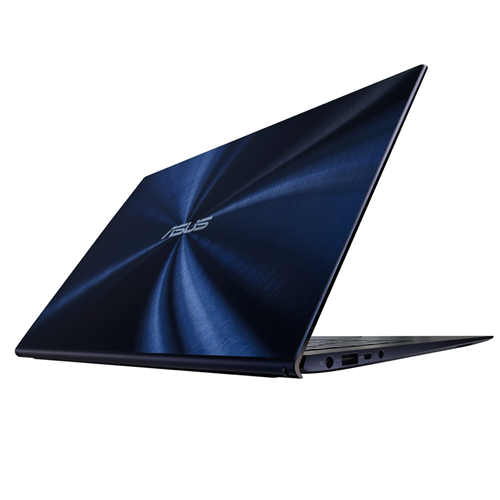
Asus made good at its promise to officially reveal the Zenbook Infinity (UX301 and UX302), its super thin but power-intensive touchscreen ultrabook, at Computex this week.
Just several hours later, TechRadar and the Infinity were getting up close and personal, and while Asus is yet to confirm a few final specifics, we had more than enough time with it to form some initial impressions.
A few years ago, nearly every PC maker had its own version of the idea ultrabook (some would call them MacBook Air clones), with a slim body, low-voltage CPU, 13-inch screen, and a premium price. In 2014, the nearly identical laptop everyone needs to have is a radically updated version of that ultrabook, adding Windows 8, a touch screen, and a better-than-HD screen resolution.
The Asus UX301 joins the Toshiba KiraBook, Apple MacBook Pro, Lenovo Yoga 2 Pro, Samsung Ativ Book 9 Plus, and others in offering a touch screen that goes beyond 1080p. In this case, it's a 2,560x1,440 display, which has so far proven to be slightly more common than the 3,200x1,800 version found in the Yoga 2 and Razer's upcoming Blade 14.

Asus Zenbook UX301LA-DH71T
In either case, it's a lot of pixels to push on such a small screen, but there are definite benefits in reading on-screen text and editing high-resolution photos. It's not an extra feature that counts as a must-have just yet, but just as touch screens have gone from oddity to standard feature in less than two years, I can see these higher resolutions coming to more and more laptops in the near future. Hopefully, many of those future models won't cost quite as much as as this one. At $1,899 (it's about $50 less at most online stores), this configuration of the UX301 is about as expensive as non-gaming laptops get. The components are appropriately premium, to be sure, with an Intel Core i7 CPU and big 256GB SSD, but only 8GB of RAM and no other particularly unique features, aside from scratch-resistant Gorilla Glass 3 on both sides of the lid. A 13-inch Retina MacBook Pro with similar specs (but minus the touch screen, of course), is $1,799. Likewise, a similarly configured Samsung Ativ Book 9 Plus can be found for about $1,750, with an even higher-res 3,200x1,800 screen. With just a bit of daylight between the prices of comparable laptops, your preference will likely rest on subjective impressions of the design, keyboard, and touch pad (all very good here, but the same could be said for the Ativ Book 9 Plus, for example). And keep in mind, if a better-than-HD screen is the main feature you're after, Lenovo's Yoga 2 Pro offers a 13-inch 3,200x1,800 hybrid for just about $1,000.

Design and features

The Zenbook was one of the first laptops to truly embrace the ultrabook vibe, with slim, tapered metal shells, and lids that stood out from the crowd with a circular pattern that some say resembled rippling water. Here the same effect is generated not in aluminum, but but under a Gorilla Glass 3 lid, over a dark blue background. The big difference between this and other recent slim ultrabook-style laptops we've tested is the incredibly high gloss finish on the back of the lid -- as one would expect from a glass top layer.

Asus Zenbook UX301LA-DH71T
At a bit over 3 pounds, the UX301 feels hefty in the hand, solidly built, but not as light as some other 13-inch laptops. However, despite the generally tight-feeling chassis, a very minor bump onto a carpeted floor left the power pin from the AC adaptor seriously bent out of shape, although still functional. That's why Apple, for example, has a magnetic power connection (although I've dropped and bumped plenty of Windows laptops over the years with nary a bent power plug pin). The matte black interior features a sunken keyboard with large island-style keys. Important keys such as Shift, Enter, and Backspace are decently sized, and the entire keyboard has a very MacBook-like vibe, from the layout of the arrow keys to the power button at the very top right corner. Typing was only slightly hindered by some keyboard flex around the center, but you'll have to be a heavy typist to really notice.
Asus Zenbook UX301LA-DH71T
The large clickpad-style touch pad is much better than the versions found on the early Zenbooks of years ago. Back then, touchpad response was finicky, and multi-touch gestures were near-useless. This version is as good as any Windows laptop, with quick response and natural-feeling inertial scrolling, but I had to turn off the Windows 8 edge gestures because they were too easy to accidentally trigger. The 13.3-inch 2,560x1,440 touch screen display is a system highlight. Covered with edge-to-edge glass, the touch response was excellent and off-axis viewing was decent, but not best-in-class. The ultra-high resolution allows for an amazing level of zoom, and you can pinch-to-zoom on pages of text to see the effect up close. The glossy screen does, however, have a lot of glare under normal lighting conditions, so you may end up twisting and turning to find a glare-free angle. The speakers are from Bang & Olufsen ICEpower, a subsidiary of the famous audio company, and sound decent for such a small laptop, although that may be because they're fired from side-edge speakers, which gives you an especially wide stereo image.

Touch

Technology with a human touch

Zenbook UX301 is wonderfully tactile, but that goes well beyond just the feel of its sleek, smooth and durable glass design. Windows 8 is designed with touch in mind and a dedicated ASUS Human Computer Interface team help make it even more intuitive to use with features like a responsive multi-touch display, and a large touch pad with multi-touch support. The backlit keyboard with automatic brightness control also means you'll always have a clear view of the keys, so you can stay productive, even in complete darkness. So whichever way you like to work, Zenbook UX301 has you covered.

10-POINT CAPACITIVE MULTI-TOUCH DISPLAY
Touch is such an intuitive way to interact with a computer display, we've been trying to do it for decades — just ask anyone who sells screen-cleaning kits. The good news is that with Zenbook UX301, reaching out to touch the screen is no longer an empty gesture. Its 13.3-inch multi-touch display responds to the slightest touch in just 30ms, so you can tap an icon to open an app, pinch a web page to make the text larger, and swipe across the screen to switch between running applications instantly. Multi-touch makes everything so much easier.
  

The power and performance you need

Zenbook UX301 is a high-performance Ultrabook™ in every sense. A 4th generation Intel® Core™ i7 processor with Intel Iris™ 5100 graphics make light work of the most demanding tasks, and keeps you entertained with your favorite games and HD video, even when you're on the move. Solid-state storage means applications launch in double-quick time and, together with Super Hybrid Engine II technology, boosts battery life and standby time to stretch out the time between recharges. Two USB 3.0 ports support the latest high-speed storage and recharge mobile devices in double-quick time, while sophisticated thermal management means Zenbook UX301 never loses its cool.

Portable power and performance
Zenbook UX301 is powered by 4th generation Intel® Core™ i7 processors for seamless multi-tasking performance and outstanding energy efficiency. A high-end 28W Core i7-4558U dual-core option makes light work of even the most demanding applications. Intel® Turbo Boost Technology gives a burst of extra speed up to 3GHz when you really need it, while Intel® HD Graphics 5100 with Clear Video HD technology gives silky smooth playback with Full HD video.
Work all day on a single charge
Energy-efficient components like the Intel® Core™ processor and solid-state drive help Zenbook UX301 last for up to 8 hours on battery power, so you can get a full day's work done before you need to recharge. Exclusive Super Hybrid Technology can also boost battery life by up to 25% for less demanding tasks like web browsing and watching video, so you can last even longer between trips to the power socket. 

 
Always ready when you are​​ 

No one should have to wait when they want to get something done, which is why Zenbook UX301 wakes from standby in just two seconds. Exclusive Super Hybrid Engine II technology gives up to two weeks' standby time too, and automatically saves all open applications and data to the solid-state drive when the battery drops below 5% charge level gets too low. So you don't have to worry about always leaving Zenbook Touch plugged into a power socket just because you're not using it.


USB 3.0, the next-generation connection for faster data transfers 
USB 3.0 is ten times faster than USB 2.0 and with two ports at your disposal, you can save photos, transfer MP3s and open multi-gigabyte video files in a fraction of the time with compatible storage. USB 3.0 has more power for mobile devices, too. Smartphones and tablets recharge in half the time compared to USB 2.0, even when Zenbook UX301 is switched off. USB Charger+ technology lets you charge your devices on-the-go. 
Audio

The UX301LA's headphone-microphone combo jack offers satisfactory power, a succinct stereo image and no interference or background noise.
UX301 audio


The speakers are no miracle-workers, but they'll get you through a videoconference just fine. Just know that (as usual with ultrabooks) any music you listen to will be reduced to the middle of the spectrum with little-to-no bass or high-end.
Processing Power
The Intel Core i7-4558U dual-core processor ranges from 2.8 GHz to 3.3 GHz, placing it just ahead of the Core i7-4500U dual-core (1.8 GHz to 3 GHz).
UX301 CPU

This gives it an average performance about 5% faster than the i7-4500U found in the Dell Inspiron 14 7000 Series, and about 19% faster than the i5-4200U that equips the Lenovo IdeaPad Yoga 2 Pro. That said, it's still a ways behind quad-core processors like the i7-4700MQ, which is 20% faster on average. But in terms of everyday usage, it's a highly capable chipset that can handle any type of task in a reasonable span of time.

Gaming

One unique thing about the Core i7-4558U is that it has an Iris 5100 graphics chipset. This GPU has 40 processing units, which is twice as much as the HD Graphics 4400 found in many similar ultrabooks, so we were expecting better gaming performance on it.
UX301 GPU
Unfortunately, despite having twice as many processing units, it only performs 10% to 15% better. It's still a night-and-day difference with a dedicated graphics card, even a mid-range one like the Nvidia GeForce GT 740M (40% better performance).

You can still play some recent titles, as long as they're ones that don't require much graphics processing power, such as FIFA 13 or Dirt 3, but even then you'll have to lower the screen resolution in order to get fluid gameplay. That said, it plays HD videos without a problem.

Battery Life

The UX301LA held out 6 hours and 15 minutes during our battery test of continuous video playback in airplane mode with the screen brightness at 100 cd/m², headphones plugged in and the keyboard backlighting turned off. That's excellent battery life (although, of course, the 13" MacBook Air and Sony Vaio Duo 13 last even longer).

Models, specs & options

Asus is offering a number of different configurations and options for the Zenbook Infinity UX301LA:

  • CPU
    2.8-GHz Intel Core i7-4558U
    Operating SystemWindows 8 Professional
    RAM
    8GB
    RAM Upgradable to

    Hard Drive Size
    Dual 128GB
    Hard Drive Speed
    n/a
    Hard Drive Type
    Dual SSDs
    Secondary Hard Drive Size
    Secondary Hard Drive Speed
    Secondary Hard Drive Type
    Display Size
    13.3
    Native Resolution
    2560 x 1440
    Optical Drive
    None
    Optical Drive Speed
    n/a
    Graphics Card
    Intel HD Graphics 5100
    Video Memory

    Wi-Fi
    802.11ac
    Wi-Fi ModelIntel Dual Band Wireless-AC 7260
    Bluetooth
    Bluetooth 4.0
    Mobile Broadband

    Touchpad Size3.9 x 2.6 inches
    Ports (excluding USB)
    Headphone; Mini DisplayPort; Mini HDMI; USB 3.0
    USB Ports
    2
    Card Slots
    SD memory reader
    Warranty/Support1-Year International/1-Year Accidental Damage/30-Day Zero Bright Dot/2-way FREE shipping/24-7 tech support
    Size12.8 x 8.8 x 0.6 inches
    Weight2.6 pounds
Source
Engadget Asus Zenbook UX301 Reviews (Critic Reviews 8.8/10) -March 7, 2014
Digital Versus Asus Zenbook UX301 Reviews (Digital Versus Rating 5/5, User Average Rating 5/5) -March 7, 2014
CNET Asus Zenbook UX301 Reviews (CNET Editor Rating 3.5/5, Average User Rating 5/5) -March 30, 2014
The Good The Asus Zenbook UX301 packs in a lot, including a better-than-HD touch screen, big 256GB SSD, and Core i7 processor, in a slim, smart design.
The Bad It costs more than most comparable better-then-HD laptops, including the Retina MacBook Pro. The Zenbook doesn't feel as rugged as its price warrants, and its battery life is unimpressive.
The Bottom Line Asus was one of the first PC makers to go ultra-thin with its Zenbook line. That latest UX301 version packs in nearly every high-end spec you'd want, but it's priced out of reach for most, and lacks an all-day battery.
Laptop Mag Asus Zenbook UX301 Reviews (4/5) -Des 6, 2013 

 
© 2012. Design by Main-Blogger - Blogger Template and Blogging Stuff