Pages

  • Twitter
  • Facebook
  • Google+
  • RSS Feed
Showing posts with label sony camera. Show all posts

Monday, May 12, 2014

Based on a pre-production SLT-A77 II running firmware 1.00

Sony has announced the SLT-A77 II which, as the name implies, is an overhaul of its semi-pro APS-C camera from 2011. The camera itself looks interesting, but so do some of the things it could be taken to signify.
Sony is not a company that could ever be accused of not trying. Eight years on from buying Konica Minolta's camera business, Sony has produced over forty interchangeable lens cameras based on at least three fundamental design approaches: conventional DSLRs, the fixed-mirror SLT system and the mirrorless E-mount models. Those cameras have continued to get better and the company has recently hit a particularly good run of form.
This success in terms of making very good, as well as very innovative, cameras starts to make sense of what has at times looked like a 'try lots of things, see what sticks' approach. The question is: once one of the designs really delivers on its promise, does it make sense to continue the other technologies in parallel?
Clearly Sony believes it does. Despite the leaps and bounds being made with the E-mount Alphas, both in terms of the on-sensor phase detection autofocus of the a6000 and the full frame sensors shoehorned into the A7 triplets, it has continued to develop its SLT cameras. The A77 Mark II features a new autofocus sensor, and it's much more than a refreshed version of an existing design. Instead the A77 II is built around the AF module with the most focus points of any camera on the market (79), covering an extremely wide area of the frame. It's also rated to work in lighting as low as -2EV. That doesn't necessarily make it quite as sophisticated at pro-grade DSLRs, since they have more cross and diagonal sensor elements, but it looks very impressive for a camera in this part of the market.

The autofocus capability combines with the camera's ability to shoot images at 12 frames per second to offer a compelling feature set. The A77 II also benefits from the autofocus tracking advances that have been included on recent Sony cameras, which use information from the main image sensor to identify and follow a given target.
Beyond that autofocus sensor, the A77 II gains an updated 24MP sensor (presumed to be a version of the sensor from the a6000, but without the on-chip sensor phase detection design) and all the benefits that the company introduced with its Bionz X processor. This means it gains three features: context-sensitive noise reduction, diffraction reduction technology and more-sophisticated sharpening.

Sony SLT-A77 II key specifications:

  • 24MP CMOS Sensor with gapless, offset microlenses
  • 12fps continuous shooting with autofocus (up to 60 JPEGs)
  • 79 point AF module with 15 cross-type AF points, covering 40% of frame
  • Increased control over AF behavior
  • 1080p60 movies with autofocus
  • Audio level monitoring during movie shooting
  • 2.4M dot OLED viewfinder
  • Pull-out three-hinge tilt/swivel 1.23m dot White Magic LCD screen
  • Built-in Wi-Fi with NFC
  • 1/8000th maximum shutter speed, shutter rated for 150,000 actuations
  • ISO 100 - 25,600 (Extendable down to 50, and up to 51,200 with multi-image combination)
  • Auto ISO customization
  • Optional, profile-based correction of vignetting, chromatic aberrations and geometric distortion
  • Top panel LCD
  • Stereo microphone and external mic socket
  • AF Micro Adjust

Focus advances

Although Sony stresses that the A77 II shouldn't be compared to pro-grade cameras (not least because it's much less expensive), it is starting to gain the kinds of paper specifications that suggest it could punch considerably above its weight. For instance, the improvements to the A77 II's autofocus system extend a long way beyond the focus sensor itself.
The Mark II gains a range of subject identifying technologies that Sony has introduced in recent models. As such, it offers Eye-AF, rather than just face detection. It also gains the most advanced version of 'Lock-On AF' that we've yet seen, which will use or allow you to specify an off-center starting AF point (previously most Sonys assumed your subject was the thing at the center of the frame, when you started tracking).
Unlike the A99, which used its on-sensor phase detection elements to track a subject's movement when it was between the focus sensor's focus points, the A77 II uses the focus points adjacent to the currently active point. In addition, the A77 II becomes the first Sony that lets you determine how doggedly the camera should stick with the current focus point - an option you'd usually only expect to find on very high level models. Better still, it lets you specify different values for video and stills shooting.
On top of this, the camera has an A99-style distance limiter that lets you specify the approximate range of focus distance over which you expect your subject to travel, to prevent the camera being distracted by near or distant subjects. Also added is an option to prioritise release or focus in continuous shooting, giving much greater control over the camera's continuous focus and shooting behavior. Overall, the A77 II represents a major step forward for Sony autofocus control.

What's in a name?

Interestingly, Sony's marketing implies that it is moving away from the 'Single Lens Translucent' name for the A77 II, instead adopting the phrase 'Translucent mirror DSLR.' This is a slightly unfortunate phrase to use, semantically, but only because the mirror is actually semi-transparent (translucence implies a diffuse image): the camera has all the elements implied by the term 'DSLR.'
The technology remains the same as before: a fixed, semi-transparent mirror redirects a portion of the light up to a dedicated autofocus sensor, while the majority passes through to the main imaging sensor. The light lost to the AF sensor has a slight cost in terms of high ISO image quality, but avoids the complexity of multiple moving mirrors, with the benefit that autofocus remains available at all times, including during video shooting.

Body & Design

The a77 II is a mid-size DSLR with a solid, weather-sealed magnesium alloy body, which has some weight to it, but not to the point of being heavy. The right hand grip feels 'just right' and gives easy access to the most important controls on the camera. Speaking of which, the a77 II is loaded with buttons and dials, but they're logically placed and usually serve one function at a time. That said, there are eleven customizable buttons on the body, with up to 51 assignable functions, so you can truly set up the a77 II to your liking.
The a77 II has traditional front and rear dials for adjusting exposure and navigating menus, and uses a 'joystick' rather than the four-way controller found on most cameras. The joystick can be used with both the Func. menu (which offers twelve customizable functions) and QuickNavi menus, though it's a bit too sensitive to inward pressure. One nice thing that Sony hasn't gotten rid of is the backlit LCD display on the top of the camera, which shows current settings, shots remaining, and battery life.
So what's changed since the original SLT-A77? The most obvious change is on the front: the giant red AF assist-lamp from the a77 is completely gone, with the a77 II's built-in flash now handling that function. The GPS receiver has been replaced with one for Wi-Fi, and there's now a spot for 'tapping' NFC devices on the opposite side of the body. The mode dial has been tweaked and the LCD now has extra white pixels (see below for both of those). Finally, the a77 II leaves the old Minolta hotshoe behind, and uses Sony's Multi Interface Shoe, which includes pins for optional microphones, in addition to a standard external flash connections.

In your hand

The a77 II is a decent sized DSLR, but ergonomically speaking its well-designed, with a nice grip and logically place controls (though there are many of them).
Despite being loaded with buttons and other controls, you won't accidentally press anything thanks to the good-sized thumb rest. The joystick is at the lower-left side of the rest and can be a bit fiddly at times. The a77 II's grip is just the right size, giving it a secure feel in your hand. Most buttons on the top plate are easily reachable with your pointer finger, though the ISO button is a bit of a stretch.

Top of camera

The majority of the cosmetic changes between the a77 II and its predecessor can be found in the top-down view. The mode dial has been reworked, with the '3D' option on the a77 being replaced with three Memory Recall (MR) spots. There's also a locking mechanism which needs to be held down in order to rotate the dial.
At the center of the photo is the aforementioned Multi Interface Shoe, which supports 'regular' external flashes (instead of the old, proprietary Konica Minolta shoe) as well as accessories such as external mics. Oddly, though, it's not comptible with the XLR KM1 high-end microphone adapter unit. Above that is the stereo microphone, which records Dolby Digital (AC3) sound.
The buttons and display to the right are self-explanatory. The finder/monitor button can be used to override the eye sensor on the EVF, while the tiny button with the light bulb on it will illuminate the LCD info display.

Articulating LCD and OLED Electronic Viewfinder

The a77 II has the same, rather complex 3" articulated screen as its predecessor. It uses a swivel-and-tilt joint, that is itself affixed to an arm that folds out from the back of the camera. This allows a huge range of positions to be adopted, including setting the screen facing forwards over the top of the viewfinder housing or, for that matter, under the bottom of the camera.
The screen sits on an articulated joint, on an arm that can tilt up from the back of the camera
The a77 II now uses a WhiteMagic display, meaning that it has an extra pixel for white, in addition to red, green, and blue. WhiteMagic allows for better outdoor visibility and improved battery life. While the RGBW dot pattern boosts the total resolution of the display to 1.23M dots, the resolution (VGA) is no better than on the a77.
The electronic viewfinder, on the other hand, is unchanged. It's one of the best you'll find, thanks to its XGA resolution and OLED technology. The EVF is quite large, thanks to a 1.09X magnification, and frame coverage of 100% is just as you'd expect.
Because of the way viewfinders are measured (using a fixed lens, rather than a lens of equivalent magnification), you also need to take the sensor size into account, so the numbers in the diagram below are the manufacturer's specified magnifications divided by the respective 'crop factors'.
The Sony SLT a77 II's electronic viewfinder is large - on par with the optical finders of full-frame SLRs. This makes it substantially bigger than those in its APS-C SLR peers such as the Nikon D7100 or Canon EOS 70D.

The green squares in the diagram represent that 15 cross-type AF points, out of 79 total. The red square at the center is for lenses with a maximum apertures of F2.8 or faster, which results in more precise focusing.

Auto ISO

The A77 II has the same two-mode Auto ISO system that's been common on recent Sony cameras: a normal Auto ISO system and a JPEG-only system that takes three shots then combines them to reduce noise. The main Auto ISO system allows you to set the upper and lower limits for the ISO settings the camera can use, but gives no option to change the shutter speed at which it increases the camera's sensitivity.
In manual exposure mode, the camera matches the behavior of recent Sonys in continuing to offer Auto ISO mode. This is implemented in such a way that you can continue to apply exposure compensation, so that you can set aperture, shutter speed and image brightness, with the camera choosing an appropriate ISO to provide the specified result.

Body elements

This Semi-transparent mirror is at the heart of Sony's SLT cameras. Light hits this mirror and approximately a third of the is sent upward to the AF sensor, while the rest continues on to the CMOS.
The a77 has a built-in flash, which is released electronically. The flash has a guide number of 12 meters at ISO 100. It's also used as a focusing aid in low light, replacing the dedicated AF-assist lamp on the original a77.
This dial, at the bottom-left of the camera's front plate, switches between manual, continuous, auto, and single autofocus mode.
The mode dial has been redesigned and now features three Memory Recall (MR) slots. There's also a locking mechanism that requires you to hold the center button down in order to rotate the dial.
One feature that has become increasingly rare on DSLRs is an LCD info display on the top plate. This backlit display shows things like aperture, shutter speed, drive mode, shots remaining, and battery life.
The a77's electronic viewfinder is one of the best you'll find, with 2.36 million dots and a magnification 1.09x. An eye sensor automatically switches between the LCD and EVF. The diopter correction knob can be seen on the far right side.
The joystick on the rear of the camera is your main tool for menu navigation. It's movement is a bit tight, and pressing inward accidentally can be an issue.
The a77 II has a wide selection of I/O ports, including flash sync, remote control, DC-in (covered here), microphone, HDMI, and USB.
As with its predecessor, the a77 II supports both SD/SDHC/SDXC and Memory Stick Pro Duo cards.
The a77 II uses the familiar NP-FM500H battery, which dates back to the A700. The battery contains 11.8Wh of energy, which translates into 480 shots per charge with the LCD, and 410 with the EVF. That's a 10% drop compared to the original a77.

Shooting with the Sony A77

by Shawn Barnett
Right away, I could tell something was different. We'd heard the presentation, which sounded pretty good, but it wasn't until I held the Sony A77 that I knew something had changed. I felt the same way when I used the Sony A700, the camera the A77 replaces. I won't go too much into detail about my disappointment that the A700 went so long without an upgrade or successor; suffice it to say that I thought that camera was Sony's best chance at making a dent in the Canon/Nikon hegemony, and instead of addressing its few flaws, Sony was spending too much time trying to appeal to the consumer market, a place where Nikon and Canon dominate even more pervasively. I've long thought that to be successful in this market, Sony needed to impress the enthusiast first: Give them a real reason to switch, and some of the masses would begin to follow.
That reason, of course, appeared however stealthily in two other consumer cameras, the Sony A33 and A55: the Translucent Mirror Technology that enabled a high frame rate (7 and 10 fps) and continuous phase-detect autofocus from two sub-$1,000 cameras. But I wasn't sure these would get the attention needed to make a dent, worthy as the technology was. It just didn't seem like the message would get out, and the two cameras looked so much like EVF long zooms, I didn't think anyone would take them seriously. Despite that concern, searches for this line of cameras is reasonably high. But the real difference will come with the Sony A77. Capturing 24.3 megapixels at 12 frames per second changes everything. I haven't been this excited about a camera in some time, but based on my experience with the Sony A77, I'd buy one.
I've already outlined most of the user experience at the top of this review. To recap: The Sony A77 is comfortable to hold and use, button placement is excellent, and its relative similarity to other SLRs on the market makes me feel right at home.

Viewfinder versus LCD. Sony's fundamental translucent mirror technology means there's no optical viewfinder to use when framing your images, so Sony draws a live image off the sensor and displays it on a relatively large OLED screen inside the viewfinder. The effect is more advanced than you're used to seeing from LCD electronic viewfinders. Instead of the distracting grid of pixels that normally greet your eye, the OLED in the Sony A77 is smooth and fairly high resolution.
It's pretty good for framing images when indoors, and it even gains up nicely to help you see detail that you can't see with your eye (though the refresh rate slows a bit). But outdoors it's a different story. While we normally turn to optical viewfinders and even EVFs in bright light, I find my eye taking a little more time to adjust to the OLED EVF in the A77's viewfinder. A sensor over the viewfinder detects my eye and makes the switch between the LCD and EVF, but usually doesn't make the switch fast enough, leaving me first in the dark, then I see a screen that's a little too dark at first, then my eye adjusts. It's not a comfortable set of changes, going from very bright to very dark, then to somewhat bright, so most often I and my colleagues shied away from the EVF when out in daylight, preferring the LCD.

Shadow detail. I got much better shadow detail than the optical viewfinder suggested.
The other problem I had with the electronic viewfinder is a tendency for shadows to appear plugged in high-contrast situations like the one at right. All of the foreground shadow was quite black in the EVF, which is partly why I took this shot: I wanted to see how the sensor would handle the deep shadows. Turns out the sensor did just fine, but I had discovered another limitation of the OLED viewfinder. Because I was thinking about the shadows, I don't remember if the sky in this shot was blown, another common problem among EVFs in high-dynamic-range situations.
Play. The Sony A77's quick nature is great for getting the family at play.
The good news is that the Sony A77's articulating LCD is excellent in both bright and dim light. Its 921,600 dots make another smooth image, one that seems to be transflective, or both transmissive and reflective. Sunlight striking its surface reflects back in relatively bright color that is quite a bit better than trying to read some LCDs through a dark cover-glass. Its unique swiveling mechanism is tough to describe, but I found myself using it a lot as I shot both cars and kids, because both benefit from shooting at a lower angle. At first it seems to be hinged at the bottom like past Sony designs, but then a horizontal hinge not unlike that used on Sony's NEX cameras swings out from the back, allowing the LCD a much greater range of motion. It can even face forward from the top or bottom. The joints are hinged with enough stiffness that the LCD stays where you leave it, so it's versatile. Figuring out which way to turn it for maximum effectiveness isn't obvious at first. When shooting low and vertically, I first swiveled the the LCD down, then to the right, so that the LCD faced upward with my right hand on the grip. However, it was often very difficult to frame images, because when I moved the camera left or right, the image moved in or out. The key is to use the second hinge. Swiveling that out presses the left edge of the LCD up against the EVF's rubber cup, and the image then matches: moving the camera left moves the image left, and moving right moves the image right.

Source
DPReview Sony SLT-A77 II Reviews
Imaging-Resource Sony SLT-A77 II Reviews
Official Website

Where to Buy
Official Website $1.399,99 - $1.699,99 Sony a77 DSLR Camera and Lens
$1,198.00 Amazon Sony A77II Digital SLR Camera - Body Only*free shipping
$1,399.95 Amazon Sony Alpha SLT-A77 Translucent Mirror Technology Digital SLR Camera Body & 16-50mm Lens with 2 Sony 32GB Cards + 2 Batteries + Backpack Case + Filter + Remote + Accessory Kit*+ $19.95 shipping
$1,270.70 Amazon Sony SLT-A77 24.3 MP Digital SLR with Translucent Mirror Technology. Includes Sony 18-55mm f/3.5-5.6 DT Standard Zoom & 55-300mm f/4.5-5.6 DT Alpha A-Mount Telephoto Zoom Lenses. 2 UV Filters, 16GB Memory Card, Tripod & More*free shipping 
$1,198.00 GearShop Sony a77 Mark II DSLR Camera(Body)

Thursday, May 1, 2014

After the announcement of the full-frame E-mount Sony A7, A7R and A7S compact system cameras and the demise of the Nex brand, you could be forgiven for thinking that Sony may not continue with its A-mount SLT (single lens translucent) cameras. However, the Sony Alpha 77 II proves this not to be the case.
As you might guess, the Alpha 77 Mk2 replaces the Alpha 77, which is now discontinued, and it has an almost identical shape and design. The new camera is aimed at enthusiast photographers who want a step-up from an entry-level model.

Features

Like the Alpha 77, the A77 Mark II has a 24 million-pixel sensor, but this is a new device that benefits from the progress that has been made with sensor design in the two-and-half-plus years since the A77 first arrived.
For the first time in an A-mount camera, the signal from the Exmor sensor is processed by a Bionz X processor. This should mean that the A77 Mark II is capable of resolving a high level of detail and controlling noise at high sensitivity settings.
Sensitivity may be set in the native range ISO 100-25,600 for still images, with a low expansion setting of ISO 50 being availble. The movie sensitivity range is a bit narrower, going from ISO 100 to 12,800.
As the SLT design has a fixed translucent mirror, the A77 Mark II has an electronic rather than optical viewfinder. Sony has used the same 2.3 million-dot OLED Tru-Finder as is found in the A7 and 7R, which is good news since this provides a clear, detailed view.
This viewfinder also allows enlargement to assist with manual focusing and can display focus peaking and zebras to indicate areas of highest contrast (sharpness).
Sony A77 Mk2
One of the benefits of the SLT design is that there can be full-time phase detection autofocus during movie shooting and when composing images on the rear screen. Sony has used a newly developed phase detection sensor in the Alpha 77 Mark II. This has 79 AF points, 15 of which are the more sensitive cross-type. In comparison, the original A77 has 19 AF points of which 11 are cross-type.
The new camera can also shoot a maximum rate of 12 frames per second (fps) with AF tracking and the buffer has capacity to allow up to 25 raw and JPEG images to be captured in a single burst. The original Alpha 77 could only cope with 11 images in a burst at 12fps. If raw file recording is deactivated, the A77 Mark II can record around 53 Extra Fine JPEGs in one blast.
Although autofocusing and auto exposure continues when shooting at 12fps, aperture is locked at the start of the sequence. If exposure needs to change during the burst it is done via shutter speed or sensitivity.
Sony is rather proud of the progress it has made with the autofocusing system for the A77 Mark II. We're told that five engineers conducted field tests for six months with high-end cameras like the Canon EOS-1DX, Canon 70D, Nikon D4, Nikon D7100 and Panasonic GH3, in order to find the best parameters for AF while shooting a variety of sports and action.
Sensor development means that the A77 Mark II's CCD AF sensor produces less electronic noise than previous devices and this helps with autofocusing speed and accuracy as well as boosting low-light performance. Spot AF performance is also claimed to have been improved with weighting given to the centre of the spot.
Sony A77 Mk2
The A77 Mark II has a collection of AF-point selection options including Wide, Zone, Flexible Spot, Local, Expanded Flexible Spot and Lock-on AF. In Expanded Flexible Spot mode the photographer selects one AF point and the camera supports this with the surrounding 8 points. In Zone AF mode the AF points are divided into 9 zones for selection.
Lock-on AF allows the user to specify how quickly the camera responds to changes in subject distance. In the past this was located in the menu, but it has been moved to the AF Mode selection area to make it quicker and easier to find.
According to Sony, almost all of its A-mount lenses are compatible with the 79 AF points, but only 61 are available when shooting at 12fps. Sony's 500mm f/8 lens is a notable, but not surprising, exception and it will only allow the center AF point to be used.
Other pleasant additions to the Alpha 77 Mark II's featureset include an HDMI port that can supply clean video output to external storage devices and Wi-Fi connectivity. As the A77 Mark II has an NFC chip, owners of NFC enabled smartphones and tablets can connect to the camera by touching the two devices together.
Interestingly, despite the presence of Wi-Fi connectivity, the A77 Mark II cannot make use of aSony PlayMemories Camera apps.

Build quality and handling

Close comparison of a pre-production sample Alpha 77 Mark II with the original Alpha 77 reveals few obvious differences. The two cameras have the same overall shape and control layout and the vertical grip that was produced for the original A77 can be used with the new camera.
There is a slight difference to the new camera's mode dial, however: it has a lock button to prevent it from being knocked out of position. The hotshoe has also been changed from the Sony (Minolta) proprietary shape to the more common universal style. It has also been upgraded to make it a multi-shoe capable of accepting a range of accessories.
In addition, the function (Fn) button has a greater range of customisation options.
Like the camera it replaced, the Alpha 77 Mark II feels pretty tough and durable. The grip on the front of the camera is deep and generously sized to provide a comfortable hold. There are also plenty of buttons and dials to give direct access to many of the key features, as befits an enthusiast-level camera.
Strangely, Sony has continued with having the 12fps shooting option located on the mode dial. Given the rethinking about the AF options, we might have expected this to be part of the drive mode options. Sony's explanation is that it's a major feature of the camera and that there are aspects such as the aperture locking at the start of the shoot that need to be considered.
On the back of the camera is a three-inch vari-angle screen, which provides a detailed, clear view of the scene, but isn't touch-sensitive. Its resolution, however, has been boosted from 921,000 dots to 1,228,000 dots.
As on the Sony A7 and 7R, the 2.3-million dot electronic viewfinder is bright and clear with plenty of detail visible.

Performance

As yet we have only been able to use a sample of the Sony Alpha 77 Mark II for a short while, but we have been able to look at a few images from it, which are published on the next page.
The early signs are good, and Sony's strong reputation for sensor design and image processing looks set to continue. However, some of the images captured at the lower sensitivity settings have slight coloured speckling that is visible at 100% on-screen. They look very good at normal veiwing sizes however, and there's plenty of detail in shots taken in the low to middle sensitivity range.
Our initial images taken at the highest sensitivity level (ISO 25,600) also look good at normal viewing sizes, although there is smoothing of noise evident at 100% on screen. I'm looking forward to testing the camera in a wider range of light levels.
Colours look natural direct from the camera and the automatic white balance copes well with a mixture of natural and artificial light.
Naturally, we have also seen some of Sony's sample images from the A77 Mark II and they look good, prompting Sony to claim that noise levels are lower than from competing cameras.
Sony's Bionz X processing engine has diffraction reducing technology to improve JPEG resolution and sharpness and it will be interesting to see how this impacts upon image quality from the A77 Mark II in comparison with the A77.
We haven't been able to test the A77MK2's autofocusing system fully by any means, but my initial impressions are very good. It seems fast and accurate even in subdued light and is capable of keeping a moving subject sharp. It also follows faces around the frame accurately.

Early verdict

While the changes made with the Alpha 77 Mark II may not seem dramatic, Sony has worked on the most important aspects – the sensor and processor – to boost speed and image quality.
Many will recognise that it's sensible to stick with the same pixel count as with the Alpha 77, as 24 million captures enough detail for most purposes and allows big prints to be made. The files are also large without being unmanageable by the average modern computer.
We're looking forward to getting a full-production sample of the A77 Mk II in so that we can test the improved autofocus system and see if it is a match for a high-end SLR's when shooting sport and action.
Naturally, we'll also investigate all other aspects of image quality including exposure metering, white balance and colour, but given Sony's claims we'll be paying particularly close attention to the noise levels at high sensitivity values. We're also looking forward to putting the AF system through its paces.

Sample Image
Sony A77 Mark II sample image
This ISO 800 image has a very impressive level of detail.
Sony A77 Mark II sample image
Though smoothing is visible when the image is viewed at 100% on-screen, this ISO 25,600 image looks very good at more normal viewing sizes.
Sony A77 Mark II sample image
Colours are rich, yet natural and there's a pleasing level of contrast straight from the camera.
Sony A77 Mark II sample image
The A77 Mark II has handled the exposure well here, and there's plenty of detail in the feathers on this bird.
Sony A77 Mark II sample image
The A77 Mark II's metering system has concentrated on the most important aspect of this scene and not been overly put-off by the bright sky.
Sony A77 Mark II sample image
There's some coloured speckling visible in the shadow areas of this ISO 250 image.

Source

Saturday, April 26, 2014

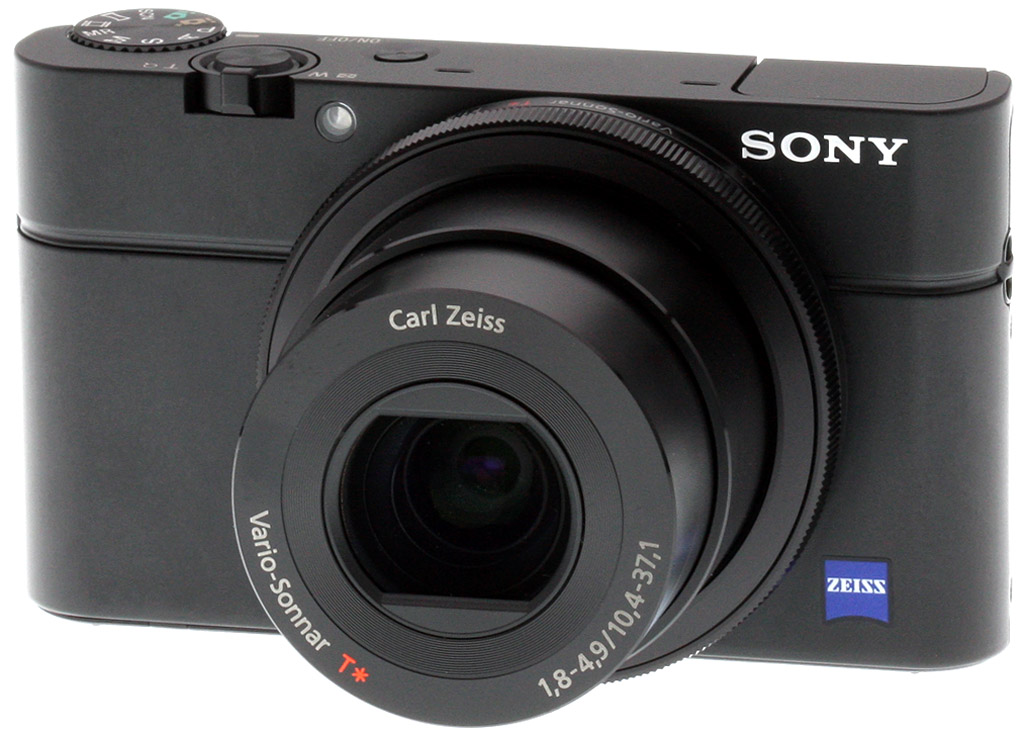
When Sony swapped the 1-inch standard CMOS of the Cyber-shot DSC-RX100 for a BSI (backside-illuminated) sensor in the DSC-RX100 II, I expressed some skepticism. My experience with BSI sensors has always been that what they gain in low-light latitude they lose in bright light. But the RX100 II delivers better photo quality than the RX100 across the entire ISO sensitivity range, and better quality than the rest of its similarly priced competition. Add in the new features like a hot shoe -- for accessories like an electronic viewfinder or microphone, as well as a flash -- plus Wi-Fi and a tilting LCD, and despite slightly slower performance the RX100 II is the best sub-$1,000 camera I've seen to date. (For a discussion of the importance of sensor sizes, see the RX100 review.)

A large sensor size is the key to producing good image quality, and here Sony has chosen a 20.2MP 1-inch Exmor CMOS sensor, which in terms of size is the same as that found in the Nikon 1 J1, and is only beaten in the compact arena by the Fujifilm X100 and Canon G1X.
Sony RX100
There are a number of other premium elements to be found on the diminutive RX100 body, including full manual control, the ability to shoot in raw format and a lens with a maximum aperture of f/1.8 at the wide end (28mm equivalent) and f/4.9 at the telephoto end (100mm equivalent). Sony uses the same size camera body to store a full-frame sensor in on the Sony RX1.
One of the key areas Sony will be shouting about in its marketing material is the RX100's low light capability. Coupled with the f/1.8 lens, it also has a sensitivity range from ISO 125 - 6400 and is equipped with the latest generation Bionz processor.

The lens is also likely to be highlighted, offering the widest aperture of any compact camera currently on the market, though this matched by the Olympus XZ-1 which has a 28-112mm f/1.8-2.5 lens and the Samsung EX-1 which has a 24-72mm f/1.8-2.4 optic. Although designed by Sony, it has been produced in partnership with Carl Zeiss, boasts T* coating to reduce ghosting and flare, and has a seven aperture blades for producing attractive circular bokeh.
Autofocusing is claimed to be as quick as 0.13 seconds in bright conditions, slowing down to 0.23 seconds in dark scenes. 

Full HD video recording in 50p is also available, along with a number of other features that can be found in Sony Alpha DSLT cameras. These include Auto Portrait Framing, Clear Zoom technology, Sweep Panorama and photo creativity guides. 

Build Quality and Handling
With the RX100, Sony has gone for a very sleek and smooth design, with a total body size that is fantastic for the amount of power contained within.
Although it is small, it is weighty enough and feels solid enough to give it a feel of real quality. The metal chassis also feels tough enough to withstand the odd knock and scrape. To back this up is the automatic drop detection that sees the camera retract its lens to protect itself should it detect a sudden fall.
Sony RX100
The RX100 is equipped with a 3.6x optical zoom lens. The physical size of the zoom is packed away in the camera's tiny body and feels very study when fully extended. The zoom is operated via a switch at the top of the camera. This feels solid and well made, and zooming itself is smooth and fluid

Again, although it is diminutive, Sony has made good use of space on the RX100 with a sensible button layout. The buttons themselves are well made, and give a satisfying click when pushed. Each of the buttons on the back of the camera is customisable, depending on how you prefer to shoot - or the settings you want to use most often.
Somewhat similarly styled to the Canon S100 premium compact, the RX100 also features a ring around the lens which can be used to set a number of different functions, such as aperture, depending on the shooting mode. It can also be customised to a different setting should you prefer it.
The ring is a great bonus, and is another element which adds an air of quality, as well as retro chic, to the RX100. Turning it smooth and fluid, while the clicks it makes as you rotate the dial can be switched off if you are shooting in video or just prefer a more discreet option.
One of the most useful features of the camera is the ability to add up to seven different functions to the Fn button. These can be changed to suit your needs, and you can also elect to only save a couple here to prevent lots of scrolling.
Sony RX100
A button that does appear to be missing, is a dedicated delete button. However, the question mark button acts as a delete button when entering playback mode.
The menu system will be incredibly familiar to anyone using any of Sony's DSLT range, being almost identical. Most features are easy to find, and you can set the Menu to either start from the first page, or the previous page you were looking at - a handy feature if you're changing the same setting often.
Start-up time for the RX100 could be quicker, taking a couple of seconds to go from power off to focusing on a subject. It's possible that very quick action could be missed due to this, but it should be fine for the majority of shots.
With its fairly large size (3 inch) and high resolution (1.229k dot), the screen is one of the RX100's best features, offering a clear and bright view from a number of different viewing angles. Images appear sharp, bright and colours look fantastic from the device. Working well in outdoor conditions, it only starts to struggle to provide a clear view in the very brightest of sunlight.
Sony has equipped the screen with TruBlack technology and a RGBW (red, green, blue, white) structure, which it says is favourable for higher contrast. Using the screen in practice is very good, whether composing images or playing back those already shot.
Sony RX100
One complaint however, is that the device is not a touchscreen. That would have been extremely handy for functions such as changing the autofocus point, but Sony has said that it doesn't feel that the target user of this camera necessarily desires a touchscreen option. We're not sure we agree with this, but we can see that the company is trying to appeal to a more "traditional" kind of user.
Although other cameras in this segment (notably the Canon G12) have an articulating screen, this camera is all about keeping it sleek and simple and a flexible device would obviously add bulk. Some may feel it's a shame that there's no hotshoe, or accessory port, to add an optional electronic viewfinder, but again this would have meant sacrificing sleekness.
One of the most appealing aspects of the RX100 is its ability to shoot in raw format. However, this option is not available for all shooting modes, such as Picture Effects, Clear Zoom and Auto Portrait Framing.
It would have been nice to be able to shoot in raw format for Picture Effects, so that you could remove them later in post-production, while Clear Zoom could have given you the option to shoot at the farthest optical reach of the lens and allowing you to crop in later. Not only this, but it's also frustrating having to dive back into the main menu to switch off raw shooting then go back to the mode you were trying to use. Perhaps Sony could implement a pop-up box which says "Would you like to turn off raw shooting?" to solve this.
Speaking of the Picture Effects, which are basically digital filters, an impressive number can be found on the RX100. However, with so many to scroll through (an option that can be accessed via the Fn button), it would be nice to be able to quickly switch off any deployed art filter, rather than having to scroll through lots of others to reach the "off" setting.
Sony RX100
Some of the filters don't display a preview on the screen, such as Illustration, meaning it can be easy to forget you have this setting activated and accidentally leave it on when shooting something else. Since you can't shoot in raw format with this activated, you could be stuck with a less than desirable image in some cases.
A digital level can be activated by hitting the Display button a couple of times. This is extremely useful when shooting landscapes, and it's handy that it stays on screen even when half-pressing the shutter to focus. 

Performance
Sony clearly has high hopes for the RX100, describing it as a "game-changing" camera. We're pleased to report that the images from it are very impressive.
Colours are bright and punchy, without being overly vibrant. Colours are also represented well in the majority of cases, with skies appearing natural and skin tones looking particularly good.
With its larger sensor and wide aperture lens, the RX100 is capable of producing some very creative images with blurred backgrounds.
Sony is keen to emphasise the quality of the lens attached to the RX100, which is produced by Carl Zeiss and features T* coating. It performs very well, with very little ghosting or flare to be found, even when shooting in direct sunlight.
Sony RX100
The wide aperture is also fantastic when shooting in lower light conditions, meaning you can still retain a lower sensitivity value with fast enough shutter speeds to get blur-free images in reasonably dark conditions.
Those images that are shot at higher sensitivities, such as ISO 800 and 1600 retain a good level of detail while also managing to keep image noise down. Sony admits that noise levels are higher than on one of its biggest likely rival cameras, the Canon S100, but also says that detail is retained better. Our time with the camera indicates this to be true, providing a good balanced image.
When shooting at apertures such as f/8, we can evaluate the sharpness of the lens. The RX100 is capable of delivering good quality images with lots of detail retained up to the edges of the frame.
Sony's D-Range Optimiser function is another feature on the RX100 which has been brought over from its DSLT range. It works by analysing a scene for areas of dark and light and adjusting the exposure accordingly. On the RX100 this works very well to produce natural looking images that contain lots of detail in the shadows without burning out the highlights. You have the option to let the camera automatically decide this for you, or you can choose between levels one to five. You can also of course switch it off altogether.
Sony RX100
Digital filters are something which more and more camera manufacturers are packing onto their devices in a bid to rival popular smartphone apps such as Instagram. On the Sony RX100 this is no different, with an impressive 33 (although some of these are variations on the same theme).
While some of course will be used more often than others, down to personal preference, several of the Effects are great fun to experiment with. One such example is the Illustration Effect, which makes images appear as if a drawing. Other interesting ones are Toy Camera (which has several variations) and Miniature, which mimics the effect of a tilt-shift lens.
Miniature has a few variations, allowing you to choose exactly where to place the area of focus (while the rest of the image becomes blurred), or have the camera automatically choose for you. This works well, especially when shooting from a high vantage point and can provide some impressive results.
It seems a little odd that Picture Effects aren't available in fully automatic mode, and as previously mentioned it's a shame they aren't available in in raw shooting mode.
Another shooting mode which can be accessed via the mode dial is Sweep Panorama. This works by shooting a number of images as the camera is swept across a scene. These images are then combined in camera to produce the resulting panorama.
A mainstay of Sony cameras for a couple of years now, the mode is a fun extra and will surely be appreciated by holiday makers. When examining these images at 100% it's clear that the image quality isn't the finest it could be, but at normal web sizes where these would likely be displayed, quality is more than adequate.
Sony RX100
Although aimed pretty squarely at the advanced photographer looking for a second camera as back-up, the camera also comes with Intelligent Auto and Superior Intelligent Auto. Both work well to identify a scene and apply the most appropriate scenes. Even the most experienced photographer may appreciate the ability to concentrate on composition and capturing quick snaps with this mode.
It's also a great camera for learning on, offering Shooting Tips which can be activated via the question mark button on the back of the camera when in shooting mode. Having fully manual and semi automatic capabilities is also helpful for those that outgrow the automatic modes and want to get a bit more creative with their photography.
Clear Zoom is one of the key features which Sony is keen to promote. Also found in its Alpha DSLT range, it works in the same way as a traditional zoom, but uses By Pixel Resolution Technology to keep resolution and quality high.
When examining the images shot at full Clear Zoom at 100%, it is noticeably worse than examining images shot at the full optical telephoto end of the lens. However, when viewing images at normal printing or web viewing sizes, the quality is very good. The Zoom function effectively boosts the 100mm (equivalent) optic to a 200mm lens - a very useful function for travel and holiday photographers, and one we can see being appreciated by many. It's a big shame however that you can't activate Clear Zoom when shooting in raw format.
Sony RX100
Sony claims that focusing on the camera is very quick, as speedy as 0.13 seconds in bright conditions, falling to 0.23 in darker conditions. In use, the RX100 is very quick and accurate to focus in the majority of cases. It's capable of macro focusing from 5cm (at the widest angle) and this works well to produce close-up images. It's nice to have this functionality with a larger sensor camera, as others, notably the Canon G1X struggle with close focusing distances.

Sample Image
Sony RX100 sample image
The RX100 is fantastic for shooting portraits, producing rich colours and good skin tones. You can select the autofocus point to focus on the eye, just as you would with a compact system camera or DSLR.
Sony RX100 sample image
28mm (equivalent)
Sony RX100 sample image
100mm (equivalent)
Sony RX100 sample image
The above three images show the lens set to 28mm (fully wide), 100mm (fully optically zoomed) and with full Clear Zoom (200mm) applied. If you examine the Clear Zoom image at 100% you will see there is a noticeable drop in quality, but it is still impressive at smaller sizes.
Sony RX100 sample image
With Clear Zoom, the RX100 effectively transforms into a 200mm optic, which is very useful for shooting faraway action such as sport or when on holiday. Although quality is not as good as at fully optically zoom, By Pixel Resolution Technology does a good job of maintaining a good image.
Sony RX100 sample image
The RX100's native image ratio is 3:2, the same as found on a DSLR, but also available is 16:9 (widescreen), 4:3, and 1:1, as in this image, which produces a square crop. This image has also been shot in Vivid Creative Style.
Sony RX100 sample image
An example of the Sweep Panorama which is captured in-camera. It works very quickly and easily, and is a fun mode to experiment with.
Sony RX100 sample image
There are several Creative Styles that can be deployed even when shooting in raw format, such as this "Vivid" mode which really makes colours pop.
Sony RX100 sample image
Another of the Creative Styles is black and white. If you shoot in raw format, you can remove, or swap, the Creative Style for a different one.
Sony RX100 sample image
One of the Picture Effects on the RX100 is Illustration, which has three different variations - this one is "Mid". Although not to everyone's tastes, it does produce a fun result.

Source
Engadget  Sony Cyber-shot DSC-RX100 II Reviews (Critic Reviews 8.7/10, User Reviews 9.2/10)
Imaging Resource Sony Cyber-shot DSC-RX100 II Reviews (5/5)
Techradar Sony Cyber-shot DSC-RX100 II Reviews (4.5/5)
CNET  Sony Cyber-shot DSC-RX100 II Reviews (CNET Editor's Rating 4/5, Average User Rating 4.5/5)
The Good The Sony Cyber-shot DSC-RX100 II delivers excellent photos, speedy performance, and a broad feature set in an attractive, compact package.
The Bad The camera tends to clip bright highlights more than we typically see, and the slippery body lacks a grip. Plus, the lack of a manually triggered macro mode might put off some fans of close-up photography.
The Bottom Line The Sony Cyber-shot DSC-RX100 II's combination of looks, speed, flexibility, and photo quality makes it a great choice for enthusiasts who can afford the price tag.
Official Website

Where to Buy
Official Website
$548.00 Buy Dig Sony Cyber-Shot DSC-RX100 Digital Camera*FREE OVERNIGHT SHIPPING!
 
© 2012. Design by Main-Blogger - Blogger Template and Blogging Stuff